
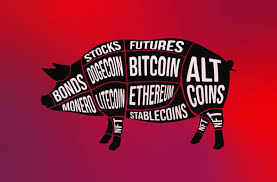
Common “Pig Butchering” Crypto Scams in 2026: The Complete Investor’s Guide to Prevention, Red Flags & Recovery
SEO Keywords: pig butchering crypto scam 2026, crypto investment scam warning signs, how to avoid pig butchering scam, crypto romance scam, fake crypto trading platform, crypto fraud prevention guide
If you’re an investor considering crypto in 2026, you’re likely hearing two very different narratives:
On one side: financial freedom, decentralized finance, AI-powered trading, tokenized real-world assets.
On the other: devastating stories of investors losing life savings to something called a “pig butchering” crypto scam.
This isn’t hype.
It’s one of the most financially destructive online fraud models in the world right now.
And if you’re entering crypto as an investor especially with substantial capital you are a prime target.
In this in-depth guide, you’ll learn:
-
What pig butchering scams really are
-
Why they’re exploding in 2026
-
How scammers psychologically manipulate investors
-
The 15 biggest red flags
-
Real-world scam patterns
-
How to verify crypto platforms
-
Steps to take if you’ve already sent money
-
Advanced protection strategies for high-net-worth investors
Let’s break it down.
What Is a “Pig Butchering” Crypto Scam?
“Pig butchering” is the English translation of the Chinese phrase “Sha Zhu Pan”, a scam model that originated in Southeast Asia and spread globally.
It refers to a long-con investment scam where criminals:
-
“Fatten the pig” (build trust over weeks/months)
-
Encourage increasingly larger investments
-
“Slaughter” (steal everything at once)
Unlike quick phishing scams, this is a strategic financial grooming process.
Victims aren’t hacked.
They’re convinced.
Why Pig Butchering Scams Are Exploding in 2026
Several trends make investors more vulnerable this year:
1. Mainstream Crypto Adoption
With institutional adoption, ETFs, and tokenized assets, crypto feels more legitimate lowering skepticism.
2. AI-Enhanced Scams
Scammers now use AI-generated:
-
Deepfake video calls
-
Fake trading dashboards
-
Personalized messages
-
Automated psychological scripts
3. Social Media Investment Culture
Platforms like TikTok, Instagram, Telegram, and WhatsApp have become breeding grounds for investment grooming.
4. High Investor FOMO
In 2026’s volatile market cycles, investors chase early-stage gains and scammers know this.
How Pig Butchering Scams Target Crypto Investors
Let’s examine the typical investor-focused scenario.
Phase 1: The “Accidental” Introduction
You receive:
-
A wrong-number text
-
A LinkedIn investment introduction
-
A dating app connection
-
A crypto discussion group invite
Platforms frequently used:
-
LinkedIn
-
Facebook
-
X
-
Tinder
The person appears:
-
Successful
-
Financially literate
-
Knowledgeable about crypto markets
-
Connected to insider opportunities
Phase 2: Financial Positioning
The scammer begins discussing:
-
AI trading bots
-
Insider token presales
-
Arbitrage opportunities
-
Private liquidity mining pools
They show:
-
Screenshots of profits
-
Trading dashboards
-
Withdrawal confirmations
Often hosted on fake platforms mimicking real exchanges.
Phase 3: Small Wins
You invest $1,000.
You see profits.
You withdraw $200 successfully.
Trust skyrockets.
Your skepticism collapses.
Phase 4: Capital Escalation
Now they suggest:
-
“Bigger allocation for higher yield”
-
“Limited-time institutional window”
-
“Exclusive round closing soon”
Investors often move:
-
$20,000
-
$50,000
-
$100,000+
Phase 5: The Slaughter
Suddenly:
-
Withdrawal fees appear
-
Tax prepayments are required
-
Liquidity freezes
-
The contact disappears
Your account balance remains visible.
But you cannot withdraw.
The money is gone.
15 Major Red Flags Every Crypto Investor Must Recognize
1. Guaranteed Returns
Crypto is volatile.
Anyone promising consistent daily returns is lying.
2. Pressure to Move Off Reputable Exchanges
Legitimate platforms include:
-
Coinbase
-
Binance
-
Kraken
Scammers push private “institutional portals.”
3. Emotional Bonding Before Investing
If the relationship escalates quickly it’s manipulation.
4. Fake Regulatory Claims
Scammers claim:
-
SEC approval
-
FCA license
-
Government partnership
But provide no verifiable documentation.
5. Withdrawal Before Deposit Requirement
If you must pay to withdraw it’s fraud.
6. Urgent “Closing Window”
Artificial scarcity is a psychological weapon.
7. Copy-Paste Trading Screens
Many fake platforms reuse identical UI designs.
8. Referral Commissions
Scam networks encourage bringing in friends.
9. Only Crypto Deposits
No legitimate wire options.
Only USDT, BTC, ETH.
10. Unverifiable Founders
Reverse image search often reveals stock photos.
11. Private Telegram-Only Support
No corporate email.
No legal address.
12. Extremely Polished Personal Lifestyle
Luxury photos often scraped from real influencers.
13. “Tax Clearance Fee” Demands
Governments don’t collect taxes through random crypto portals.
14. Rapid Romance Acceleration
Love bombing precedes capital extraction.
15. Refusal to Video Chat Live
Pre-recorded deepfakes are common.
Psychological Manipulation Tactics Used on Investors
Pig butchering scams are psychological warfare.
Authority Bias
They position themselves as insiders.
Reciprocity Principle
They give small profits first.
Commitment Escalation
Small investment → larger investment.
Fear of Missing Out (FOMO)
“Window closing in 48 hours.”
Isolation
They discourage discussing with others.
How to Verify a Crypto Investment Platform in 2026
Step 1: Domain Age Check
New domain (<6 months)? Red flag.
Step 2: Regulatory Database Search
Search official government regulator sites.
Step 3: Independent Reviews
Look for:
-
Scam warnings
-
Investor complaints
-
Withdrawal issues
Step 4: Blockchain Transparency
Legitimate DeFi protocols have:
-
Audits
-
Public smart contracts
-
GitHub repositories
Step 5: Test Withdrawal
Before scaling investment:
-
Withdraw 100% of funds.
-
Re-deposit only if successful.
Real Investor Case Patterns (2025–2026)
-
Executive lost $280,000 via LinkedIn AI bot investment.
-
Retired investor lost $450,000 in “liquidity mining.”
-
Entrepreneur wired $120,000 after 2-month relationship grooming.
These are not isolated cases.
They are systemic.
Advanced Protection Strategy for Serious Investors
1. Use Cold Wallet Storage
Never leave large funds on unknown platforms.
2. Two-Factor Authentication Everywhere
Especially on exchanges.
3. Separate Investment Accounts
Dedicated wallet for new experiments.
4. Independent Due Diligence
Never rely solely on a single person’s explanation.
5. Professional Consultation
Before investing $50,000+, consult a licensed financial advisor.
What to Do If You’ve Already Sent Crypto
Act fast.
-
Stop sending more.
-
Preserve all chats.
-
Report to:
-
Local law enforcement
-
Cybercrime reporting centers
-
-
Notify your exchange immediately.
-
Consider blockchain tracing firms.
Recovery is difficult but early reporting helps.
Why Investors Are Specifically Targeted
Investors:
-
Have higher liquidity
-
Understand markets
-
Are comfortable with risk
-
Respond to “alpha” language
Scammers mirror this language convincingly.
2026 Emerging Variations to Watch
AI Deepfake Video Advisors
Fake Zoom investment calls.
Tokenized Real Estate Scams
Fake blockchain property platforms.
AI Trading Bot “Partnerships”
Subscription models leading to capital drain.
Cross-Chain Bridge Arbitrage Fraud
Advanced-sounding but fake technical schemes.
Final Thoughts: Crypto Is Not the Problem Trust Is
Crypto itself isn’t a scam.
But blind trust is.
As an investor considering crypto in 2026, your edge is not just research.
It’s skepticism.
If someone:
-
Builds emotional closeness
-
Promises predictable returns
-
Pressures fast decisions
-
Demands crypto-only deposits
Walk away.
The opportunity will not disappear.
But your capital might.
Leave a Reply